

 See My Latest Article on HelloNation
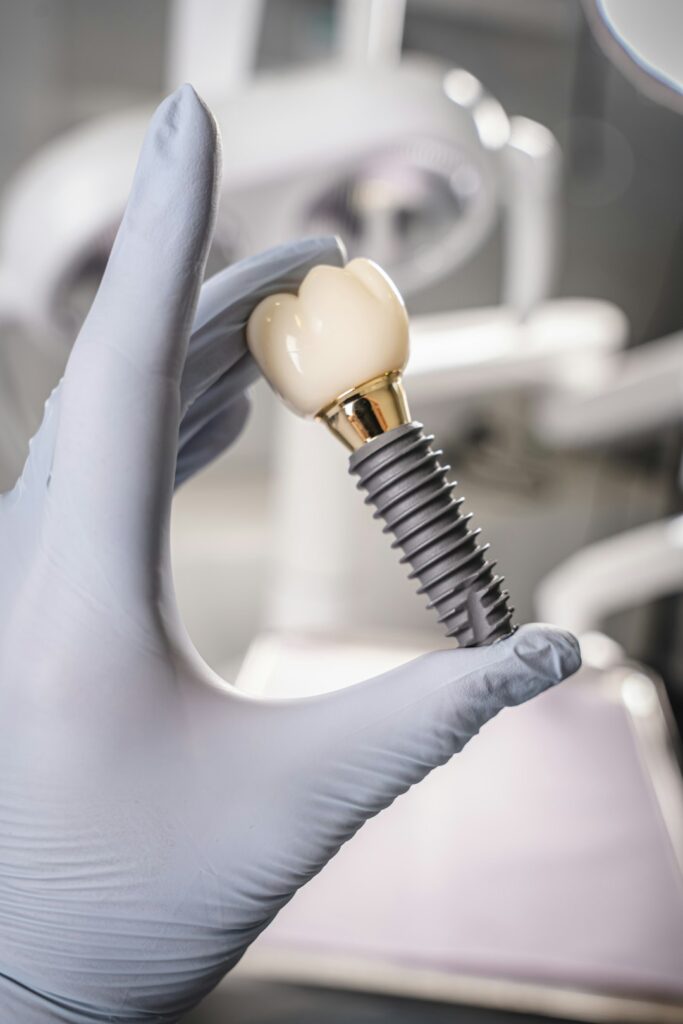
Dental implants may still be possible after bone loss, but the treatment plan depends on how much bone remains, where it is located, and whether the gums and jaw are healthy enough to support an implant. Some people need bone rebuilding before implant placement, while others may qualify for modified implant approaches that use the bone available.
Can dental implants be placed if the jaw has lost bone?
Often, yes. Bone loss does not automatically rule out dental implants.
An implant needs enough healthy jawbone to remain stable while the surrounding bone heals and bonds with its surface. If the ridge has become too thin or short, placing an implant immediately may increase the risk of poor stability, damage to nearby structures, or future implant problems.
The amount of bone loss matters more than simply knowing that bone loss exists. A person missing one tooth may have a small defect in one area. Someone who has worn dentures for many years or has advanced gum disease may have more widespread loss affecting the width and height of the jaw.
Why does bone loss happen after tooth loss?
The jawbone receives stimulation from tooth roots. After a tooth is removed, that stimulation decreases, and the surrounding bone can gradually shrink. This process may begin relatively soon after tooth loss and can continue over time.
Other causes include:
- Gum disease that destroys the bone supporting natural teeth
- A difficult extraction or injury
- Long-term denture use
- Infection around a missing or failing tooth
- Certain cysts or other jaw conditions
- Less commonly, medical conditions or medications that affect bone healing
Bone loss can occur even when the gums look normal. A ridge may appear adequate from the outside but be too narrow internally, which is why treatment planning usually requires detailed imaging.
How is bone loss evaluated before implant treatment?
A careful evaluation usually combines an oral examination with dental imaging. Three-dimensional cone-beam computed tomography, often called CBCT, can show the available bone height and width more precisely than a standard two-dimensional dental X-ray.
The evaluation may examine:
- Bone width and height at the proposed implant site
- The location of the jaw nerve in the lower jaw
- The position of the sinus above the back teeth in the upper jaw
- Signs of active infection or gum disease
- The condition of neighboring teeth
- Bite forces and available space
- General factors that may affect healing
A treatment plan should also account for the cause of the bone loss. Placing an implant without controlling active gum disease, for example, does not address the condition that damaged the supporting bone in the first place.
What is a bone graft, and when might it be needed?
A bone graft adds material to an area where the jaw ridge is too thin or too short. The graft acts as a framework that can support the formation of new bone. Depending on the situation, the graft may come from the patient, a processed human donor source, an animal-derived material, or a synthetic substitute.
Common procedures include:
Ridge augmentation
This procedure rebuilds the width or height of a narrow section of the jaw. It may be considered when tooth loss has caused the ridge to flatten or shrink.
Socket preservation
When a tooth is removed, graft material may be placed in the empty socket to limit collapse of the ridge. This is generally easier to perform before substantial bone shrinkage has occurred, although it cannot prevent every change.
Sinus augmentation
In the back portion of the upper jaw, the sinus may expand downward after teeth are lost. A sinus lift gently raises the sinus lining so additional bone can form beneath it. In some cases, an implant can be placed during the same general treatment period; in others, healing is allowed to occur first.
Guided bone regeneration

A graft may be covered with a protective membrane to help bone-forming cells repopulate the area while limiting interference from soft tissue. This approach is often used for localized defects.
Does bone grafting always have to happen before an implant?
No. The timing depends on the defect and the implant site.
Some people receive a graft and wait several months for the area to mature before implant placement. Others may have a graft and implant placed during the same procedure if there is enough existing bone to provide initial stability.
If the ridge is severely deficient, staged treatment is more likely. The first procedure rebuilds the site, and later imaging determines whether enough bone has developed for implant placement.
Healing time varies with the size of the graft, the location, the person’s health, and the type of procedure. It is not unusual for the overall process to take longer than treatment for an implant placed in an area with abundant bone.
Are there alternatives to bone grafting?
Sometimes. The available choices depend on anatomy rather than on a single universal technique.
Possible approaches may include:
- Shorter implants when adequate bone height is limited
- Narrower implants when the ridge is thin but otherwise suitable
- Angled implant placement in carefully selected cases
- Fixed or removable tooth replacement that does not use implants
- Use of remaining natural teeth to support a dental prosthesis
- Sinus procedures when limited bone is located in the upper back jaw
These approaches are not interchangeable. A shorter or narrower implant may reduce the need for grafting in one location but may not be appropriate where biting forces are high or the bone is too weak.
Does osteoporosis prevent dental implants?
Osteoporosis does not automatically prevent implant treatment. The more relevant questions are how severe the condition is, which medications are being taken, and whether those medications affect bone turnover or healing.
Some drugs used to treat osteoporosis and certain cancers can rarely be associated with jaw complications after oral surgery. This does not mean that implants are always unsafe, but the medication history must be reviewed carefully. Prescribed medication should not be stopped without guidance from the clinician who manages it.
Diabetes, tobacco use, poor nutrition, immune problems, and uncontrolled gum disease can also affect healing. These factors do not always make implants impossible, but they may increase risk or require additional preparation.
What can Midland residents expect from the process?
For local residents, the practical issue is usually time. Bone rebuilding and implant treatment may involve multiple healing stages, follow-up imaging, and temporary tooth replacement during treatment.
Dry West Texas conditions do not cause jawbone loss by themselves, but people living in Midland may notice that mouth dryness, dehydration, or seasonal allergies make oral discomfort more noticeable after dental procedures. Staying adequately hydrated and following post-treatment instructions can support comfort, while persistent swelling, drainage, fever, worsening pain, or numbness should be evaluated promptly.
The final decision depends on the specific anatomy shown by imaging, the health of the gums, medical history, and the type of restoration planned. Bone loss can make implant treatment more complex, but it does not by itself close the door to replacing missing teeth with implants.